Daiichi Sankyo, in collaboration with the international NGO, JOICFP, launched the project “Promotion of cervical cancer prevention through early detection and treatment in Kenya” in July 2022 and completed the initiative in June 2025.
In Kenya, breast cancer and cervical cancer are the most common cancers among women, while cervical cancer has become the leading cause of cancer deaths. Additionally, cervical cancer is the most common cancer among women living with HIV (human immunodeficiency virus) and it has been reported that HIV-positive women have six times higher risk of developing cervical cancer compared to HIV-negative women. Moreover, accurate knowledge and information about cervical cancer and sexually transmitted infections (STIs) are not sufficiently disseminated among community members, and health facilities face challenges such as inadequate capacity for screening and treatment.
In response to these issues, this project implemented activities over three years aiming to promote awareness through community health volunteers, provide cervical cancer screening and treatment at the government health facilities, and improve access to the HPV vaccine. In cooperation with the Nairobi County Department of Health Services and target sub-county health offices, training and mentoring were provided to enhance capabilities of healthcare workers and community health volunteers. Cervical cancer screening was integrated into routine medical services at health facilities, and the referral system to higher-level facilities was strengthened to improve coordination both inside and outside the facilities. Furthermore, in collaboration with school health nurses, local government officials, and community health volunteers, communication strategies, messages and educational materials were developed to reduce misunderstandings and anxieties regarding cervical cancer screening and the HPV vaccine among community people. Health facility staff were also instructed on data recording and reporting to improve data accuracy, thereby advancing multifaceted improvements. These efforts contributed to the enhancement of prevention, screening, and treatment systems for cervical cancer.
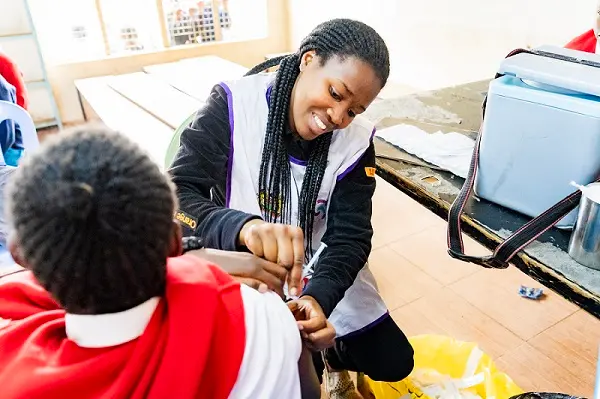
HPV vaccination for girls between 9 to 14 years old at school
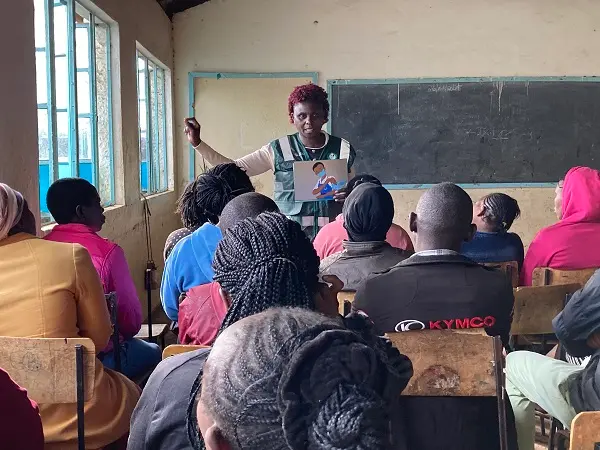
School health nurse explaining about the HPV vaccine to parents at school
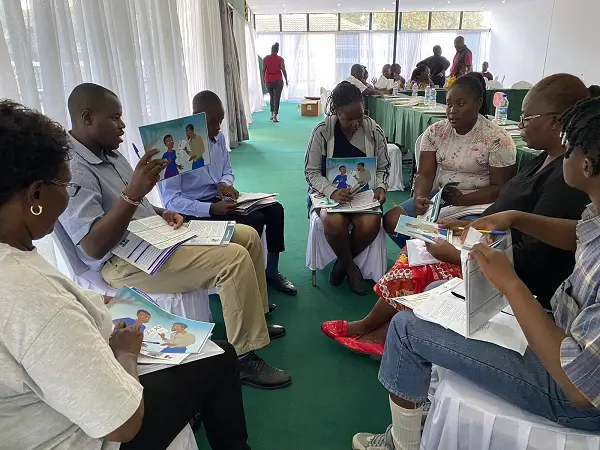
Training for community health volunteers on how to use dialogue cards to raise awareness of cervical cancer
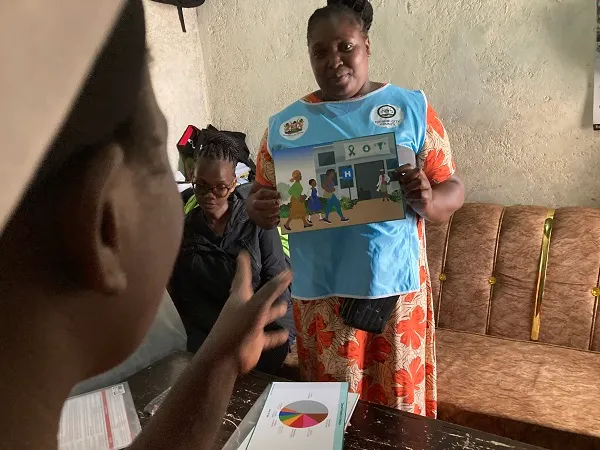
Community health volunteers use the dialogue cards developed in this project to raise awareness of cervical cancer
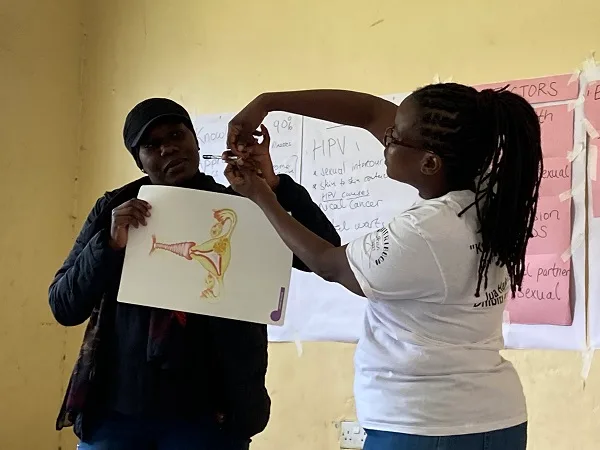
JOICFP staff (right) explaining cervical cancer screening to community health volunteers
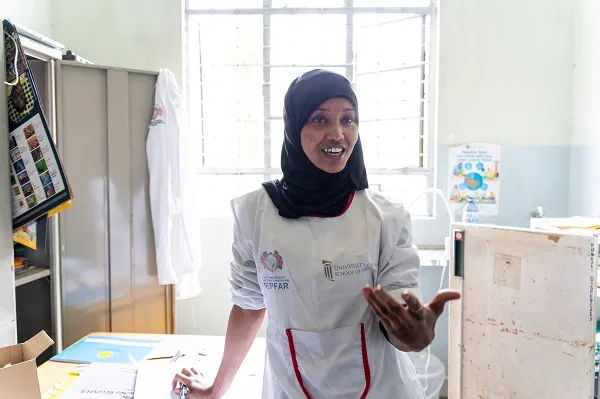
A nurse has honed her skills in cervical cancer screening and precancerous lesion treatment through this project to become mentor
As a result, over the three years, more than 130,000 women in the project target areas underwent cervical cancer screening. Compared to an initial screening rate of about 12% in the first year of the project, the screening rate increased significantly to 66.8% in the third year (the national target: 70%). Additionally, the HPV vaccination rate improved from 36% in the first year to 87.1% in the third year (national target: 90%). Moreover, through strengthened collaboration between health centers and dispensaries conducting screenings and referral hospitals, the treatment completion rate of clients with precancerous lesions was greatly improved. However, in some communities, psychological resistance to cervical cancer screening remains strong due to cultural and religious reasons. Taking such perspectives into account, strengthening ongoing awareness training is needed. Furthermore, if screening becomes available not only at government health facilities but also at small private clinics in the future, it is expected that the number of women receiving screenings will increase, leading to earlier detection and treatment.
Through this project, we have contributed to achieving Sustainable Development Goal (SDG) 3, “Ensure healthy lives and promote well-being for all at all ages,” Goal 5, “Achieve gender equality and empower all women and girls,” and Goal 17, “Strengthen the means of implementation and revitalize the global partnership for sustainable development.”
Project overview:
- Region: 3 Sub Counties (Makadara, Kamukunji, and Kibera/Langata) of Nairobi County, Republic of Kenya
- Activity summary: 1) Provide accurate information on SRHR*1 including information on cervical cancer and STIs to community people and awareness raising activities to encourage behavior change to promote the prevention and screening of cervical cancer; 2) provide cervical screening and early treatment at health facilities, and 3) strengthen the healthcare referral network for the screening and treatment of cervical cancer
- Duration: 3 years (July 2022 to June 2025)
- Collaborative partner: JOICFP*2
- *1Sexual and Reproductive Health and Rights
- *2Japanese organization for International Cooperation in Family Planning, a Japan-based international NGO promoting sexual and reproductive health and rights (SRHR) and gender equality over 40 countries since 1968.
As a pharmaceutical company with the purpose, to “contribute to the enrichment of quality of life around the world,” the Daiichi Sankyo Group is committed to address healthcare access challenges in regions with weak healthcare infrastructure.
Project Summary and KPIs