With the aim of deepening the understanding of our business, drug discovery activities, as well as widely spreading knowledge about the importance of medicine as a good corporate citizen, Daiichi Sankyo engages in dialogue with local communities, which is one of our most important stakeholders.
Operation of the Daiichi Sankyo Kusuri Museum
The Daiichi Sankyo Kusuri Museum(The Daiichi Sankyo Museum of Medicine. “Kusuri” means “medicine” in Japanese.) was opened in 2012 for the purpose of deepening the knowledge of visitors to the Museum about the importance of medicine and drug discovery activities while playing and enjoying, and for the purpose of contributing to the revitalization of the Nihonbashi area where our head office is located. A facility that offers information to a wide range of stakeholders, the Museum is in its 13th year anniversary, with the cumulative total number of visitors exceeding 170,000.*1
The Museum exhibits include easy-to-understand explanations of the activities of pharmaceutical companies and the proper use of medicine. Located in the Nihonbashi district of Tokyo, which has historically been associated with medicine in Japan, the facility welcomes visitors of all ages, and is even used for company training, school trips, and industry research by job hunters, as well as by parents aiming to foster a sense of curiosity in their children.
The Museum is currently only open for reservations, with a maximum of three slots per day, two groups per slot, and of 20 people per group. *2
In addition, we have posted some of the videos shown at the museum on the official website of the Daiichi Sankyo Kusuri Museum, even if they are unable to visit in person including those who live far away.
For the enjoyment of all visitors, “Kusurina” and “James,” the characters of the Daiichi Sankyo Kusuri Museum, are waiting for you to visit the Museum in their seasonal outfits.
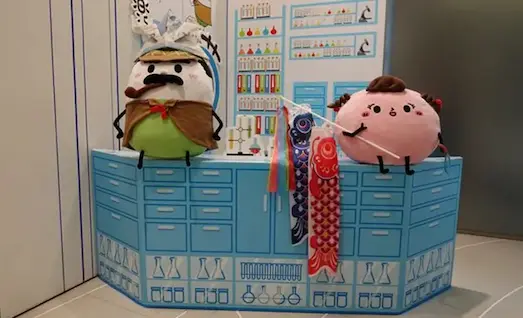
We will continue to develop new ideas and make improvements to the Museum so that visitors can learn even more about the importance of medicine while having fun despite the COVID-19 pandemic.
- *1 As of June 2025
- *2 As of June 2025. Please check the official website of the Kusuri Museum before visiting.
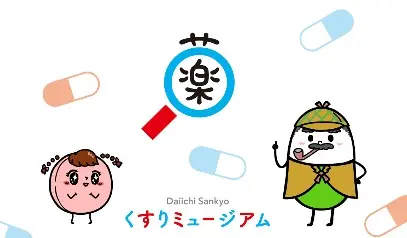
“Kusurina” and “James” at the Kusuri Museum
Daiichi Sankyo Kusuri Museum
Daiichi Sankyo’s Efforts for Promoting Correct Understanding of Diseases and Enlightening Activities
We are committed to enhancing every employee’s understanding of certain diseases and actively promoting disease awareness to help people in local communities lead healthier lives.
In this article, we introduce our initiatives related to four medical conditions that can significantly interfere with daily life: insomnia, migraine, osteoporosis, and pain.
Insomnia
In today’s high-stress society, the number of people reporting sleep disturbances is increasing. According to research, one in five adults in Japan experiences some form of insomnia, indicating that many people are affected.
To raise public awareness of sleep health, we have launched an educational website called "Kaimin Japan(Kaimin-Japan)". The site provides easy-to-understand information on topics such as the mechanisms of sleep, the causes and treatments of insomnia, and self-care tips for healthier sleep.
Migraine
Migraine is a common yet often misunderstood condition. Many patients struggle in silence due to a lack of understanding from those around them. It can severely impact daily and social life, with a reported prevalence of 8.4% among Japanese adults.
Migraine is more than just a headache—it can be accompanied by sensitivity to light, sound, and smells, as well as nausea or vomiting. Even outside of an attack, migraines can interfere with school or work life.
To support those living with migraine, we operate an educational website for the public called "Migraine.info (Migraine.info)", where people can deepen their understanding and learn coping strategies.
Osteoporosis
As Japan enters a supper-aged society, the number of people affected by osteoporosis is expected to continue rising. However, treatment rates in Japan remain lower than those in other developed countries, and the number of hip fractures—one of the leading causes of bedridden status — is increasing.
With the slogan "Let’s Get a Bone Density Test!", we have launched the public website "Hone Daijobu.com (hone-daijobu.com)" to raise awareness about osteoporosis and encourage proactive bone health management among patients and their families. The goal is to help people maintain independent, fracture-free lives.
Pain
Understanding both the cause and type of pain is essential to proper management. It is also important to initiate timely and appropriate treatment to prevent chronic pain from becoming chronic.
We provide healthcare professionals with tools that support early detection of neuropathic pain, such as in-clinic posters and screening checklists. Additionally, we offer a public website, "Itami-no-Chiryo.com (
Itami-no-Chiryo.com)", to help patients and their families better understand pain and its management.
In addition to these four conditions, our corporate website’s "For the General Public & Patients" section also offers helpful information on a wide range of topics, including influenza, atrial fibrillation, and other diseases—supporting prevention and early detection across many therapeutic areas.