The Daiichi Sankyo Group is striving to use resources and energy efficiently under the EHS Management Policy, which states, “Lower the environmental impact of the entire supply chain by conserving energy and resources, and reducing greenhouse gas emissions and waste”. To facilitate responsible corporate activities that address climate change, we have set the goals of reducing CO2 emissions in FY2025 by 42% and in FY2030 by 63% compared to FY2015 based on the approach of the Science Based Targets initiative (SBTi)*1, which aims to help accomplish the goal of the Paris Agreement (keeping the average increase in global temperature below 1.5°C compared to pre-industrial revolution levels). At Daiichi Sankyo Onahama Plant, we completed construction of a new office building in March 2023 and acquired the Daiichi Sankyo Group’s first Nearly ZEB*2certification under the Building-Housing Energy-efficiency Labeling System (BELS). Daiichi Sankyo Pharmaceutical (Shanghai) Co., Ltd. followed the Onahama Plant and Daiichi Sankyo Europe’s Pfaffenhofen Plant in putting its solar power system into operation. In April 2022, we switched to renewable electricity (FIT non-fossil fuel energy certificates with tracking) for the electricity we use in 13 sites in Japan, including our head office, production sites, research laboratories, and training facilities. Moreover, operating sites in Europe and Brazil have reduced CO2 emissions by expanding the use of renewable energy. We are continuing our efforts to further utilize renewable energy at our operating sites globally.
Our CO2 emissions(Scope 1+Scope 2) for FY2024 were 116,312 tons (42.7% lower than in FY2015). Not limited to our efforts to “mitigate” CO2 emissions and other environmentally hazardous actions, we facilitate initiatives to “adapt” to impacts that have become tangible or influence that is inevitable in the medium- to long-term.
*1An international initiative that encourage companies to set CO2 reduction targets in line with the Paris Agreement goals.
*2A building that is nearly a Net Zero Energy Building, cutting net energy consumption by 75% or more.
TCFD Disclosure
Climate Change Risks
The Daiichi Sankyo Group recognizes environmental issues such as global warming or extreme weather which have impacts on our work and life. Under the Daiichi Sankyo Group Corporate Conduct Charter and the Daiichi Sankyo Group EHS Policy, we are promoting environmental management and practicing responsible corporate activities to mitigate climate change and other environmental challenges. We expressed our support for the recommendations of the TCFD*3 in May 2019, and disclosed information such as governance and results of scenario analysis in accordance with the TCFD disclosure framework in 2020. In addition, we will disclose information in accordance with the TCFD recommendations revised in October 2021, and aim to further strengthen our climate change-related governance and business strategies to proactively respond to climate change, which is a global issue.

- *3The Task Force on Climate-Related Financial Disclosures. A task force set up in December 2015 by the Financial Stability Board (FSB), an international organization joined by central banks and financial regulators of major countries.
Governance
The Daiichi Sankyo Group has established the Sustainability Committee to effectively identify and respond to changes in the external environment, including evolving social issues and societal conditions, and to promote sustainability management by integrating business activities with efforts to address these challenges. The Sustainability Committee is chaired by the Head of Global Corporate Strategy and comprises leaders from individual business units and corporate functions. The Committee meets, in principle, twice a year to discuss strategies and policies related to human rights; environmental, health, and safety (EHS); sustainability information disclosure; and social contributions. With respect to EHS, the Committee deliberates on, oversees, and reports on EHS management policies, set targets, and related activities. EHS-related results are reported to the Executive Management Committee (EMC),and matters of particular importance are subsequently reported to the Board of Directors.
Corporate Governance
Environmental Management Promotion System
Risk management
We strive to identify risks that may force changes to business activities, such as climate change and water-related risks, and implement countermeasures as part of our Group’s risk management system. The Sustainability Committee plays an important role in evaluating and managing the financial impact of how climate change impacts present risks and opportunities to our business, and in enhancing resilience. In cases of significant risk concerns, the committee reports to the EMC, which in turn reports to the Board of Directors, ensuring integration into the company's overall risk management framework. Additionally, we deliberate and decide on medium-term and short-term targets and implementation plans with the aim of achieving long-term carbon neutrality transition.
Risk
Opportunity
〈 Source 〉1.5°C Scenario : IEA WEO 2021 SDS, IEA NZE 2050 / 4°C Scenario : IPCC RCP8.5
Ratio of CO2 emissions by scope used in TCFD analysis
Strategy
As environmental burden on the earth increases, corporate activities cannot be sustained without achieving a sustainable society. Particularly for pharmaceuticals, which are life-related products, supply chain disruptions and reduced pharmaceutical supply capacity due to intensifying weather disasters represent significant business risks as well as social risks. Therefore, we believe it is important to promote decarbonization and reduce the environmental impact of our business operations, while also advancing decarbonization across the entire supply chain through collaboration with business partners, thereby achieving carbon neutrality and mitigating physical impacts. A characteristic of our CO2 emissions is that Scope 1 and Scope 2 emissions directly generated from business activities are small, while Scope 3 emissions from the supply chain account for the majority. Based on this recognition, we conducted scenario analysis
to understand the impact of climate change on our business and clarify resilience.
Scenario analysis
In FY2024, we established a cross-departmental task team and conducted study sessions for relevant departments covering an overview of scenario analysis and net-zero scenarios published by the IEA (International Energy Agency) and IPCC (Intergovernmental Panel on Climate Change), examining business risks and opportunities from 2030 onwards. Using scenarios from the IEA and IPCC, we identified risks and opportunities across the entire value chain for both “transition” and “physical” aspects, and these were reviewed and approved by the Sustainability Committee in the FY2025.
We selected the 1.5°C scenario, where decarbonization is achieved, and the 4°C scenario, where decarbonization is not achieved, as we determined that it is important to assume and prepare in advance for extreme cases with regard to both the physical and transition risks.
Specifically, we identified risks and opportunities from the perspectives of “procurement,” “direct operations,” and “product and service demand,” and classified them into six categories. For each category, we conducted a company-wide assessment of risks and opportunities from the perspectives of “frequency of occurrence,” “business impact and financial impact,” and “investor interest” for the periods up to 2030 and 2050, and organized the potential impact on business and resilience.
We recognize that the direct transition risks associated with our business activities are limited. However, with regard to the supply chain, cost increases due to carbon taxes and transition measures are considered potential risks in the future. Additionally, regarding physical risks, there are concerns about stable supply due to the intensification of weather-related disasters. Based on this analysis, we will address transition risks by continuing to promote energy-saving measures, leveraging renewable energy, introducing decarbonization technologies, and collaborating with business partners to mitigate costs through measures such as carbon tax avoidance. With regard to physical risks, we will strengthen our business continuity plans (BCPs) to include flood countermeasures, implement preventive measures to enhance the stability of our supply chain, consider emergency supply responses, secure alternative measures, and implement measures such as installing rainwater tanks and utilizing recycled water as drought countermeasures. These measures will help us avoid damage to our group and aim for sustainable improvement in corporate value. For important risk countermeasures identified and evaluated through scenario analysis, we will manage progress across the entire group through the Sustainability Committee and EMC.
Disclosures based on TCFD recommendations
Results of 1.5°C scenario analysis
*The degree of impact is evaluated based on a scale of: Negligible (below 0.1 billion yen); Minor (between 0.1 to 5.0 billion yen); Medium (between 5.0 to 10.0 billion yen); Major (between 10.0 to 30.0 billion yen).
Business risks are comprehensively assessed based on the degree of impact and frequency of occurrence
Disclosures based on TCFD recommendations
Results of 4°C scenario analysis
We understand that the risks of direct transition to our Company’s business activities are limited. However, in the future, we believe that the risks in the supply chain will include carbon taxes and rising costs for transition measures. As for physical risks, there are concerns for stable supply due to intensification of weather-related disasters. Based on the results of this analysis, for transition risks, in addition to promoting energy conservation measures currently being implemented, we will create opportunities to reduce costs by using renewable energy, introducing decarbonization technologies, and collaborating with business partners to avoid the burden including carbon taxes. As for physical risks, we will work to avoid damage to the Group and aim for sustainable enhancement of corporate value by deepening the BCP, including flood control measures, implementing preventive measures to enhance supply chain stability, ensuring diversity, supporting measures, and securing alternative measures. The EHS Management Committee and the Board of Directors monitor the progress in the Group as a whole with regard to important risk measures evaluated and identified through the scenario analysis.
Indicator and Target
We have set KPIs and environmental targets in the 5-Year Business Plan as indicators and targets for evaluating and managing potential business impacts and climate-related risks and opportunities for each value chain. Based on the progress of the 5-Year Business Plan, we reviewed KPIs related to climate change in FY2021. As a result, we raised Scope 1 and Scope 2 targets to the level of 1.5℃ targe. For Scope 3, we updated the supplier engagement target by requesting suppliers to set their CO2 emission reduction target to “1.5℃ level,” and in June 2023, we obtained certification for the “1.5℃ target” from the SBT Initiative.
CO2 emission
Unit: t-CO2
Calculation Method
- Scope 1: Japan's carbon dioxide and energy conversion factors are based on the Law Concerning the Promotion of the Measures to Cope with Global Warming. For countries other than Japan, the values are based on the standards of the authorities in the source regions or GHG protocols.
- Scope 2: Calculated using emission factors based on electricity purchase contracts (market standard).
In addition, we have adopted for our directors medium-term performance-based share compensation according to the degree of achievement of goals of ESG indicators, including climate change.
Executive Compensation
For internal carbon pricing, we consider changing from a system that verifies cost-effectiveness in the form of a virtual carbon price (targeting facilities with particularly large energy-saving potential at Group companies in Japan, taking into account running costs, electricity consumption, CO2 emissions, carbon taxes, etc.) to a new system that takes into account the introduction of a domestic carbon credit market.
CDP’s Climate Change 2025
Daiichi Sankyo has been selected as an A-List company for the 2025 fiscal year by CDP*4, an international non-profit organization, in recognition of its leadership in transparency and performance across two areas: climate change and water security.
*4An international environmental non-profit organization that operates a global environmental disclosure system for corporations and municipalities
Joining the RE100
In July 2021 we joined the international initiative RE100*5 , which aims to achieve 100% renewable energy for power consumed in business activities. Based on our purpose " Contribute to the enrichment of quality of life around the world" and our mission " Create innovative pharmaceuticals addressing diverse medical needs," we are committed to continuously providing value to society and our stakeholders through our business activities, while simultaneously promoting the growth and development of our Group. In our 5-Year Business Plan we have defined one of the materiality areas related to the foundation of our business as “Promoting Environmental Management,” and will take on a wide range of challenges to reduce the environmental impact across the entire value chain in order to achieve the plan’s goals of realizing a decarbonized society, circular economy, and society in harmony with nature.

*5An international initiative to promote 100% corporate renewable energy, run by The Climate Group, an international environmental NGO, and CDP, which encourages companies to disclose information about their climate change initiatives.
CO2 Emissions Reduction Targets and Performance
CO2 emissions (Scope 1+Scope 2) for FY2024 were 116,312 t-CO2, 42.7% reduction compared to FY2015. Not limited to our efforts to "mitigate” CO2 emissions and other environmentally hazardous actions, we facilitate initiatives to "adapt" to impacts that have become tangible or influence that is inevitable in the mid- to long-term. By scope, FY2024 performance for the entire Group was 91,836 t-CO2 for Scope 1 and 24,477 t-CO2 for Scope 2, which were 7.7% higher and 2.0% higher than in FY2023, respectively. Scope 3 CO2 emissions were 4,159,664t, showing an 5.6% decrease from FY2023.
To reduce Scope 3 (Cat1) emissions, we have set a KPI in our current mid-term business plan for more than 70% of suppliers to have a 1.5°C tar- gets, and are currently strengthening engagement.
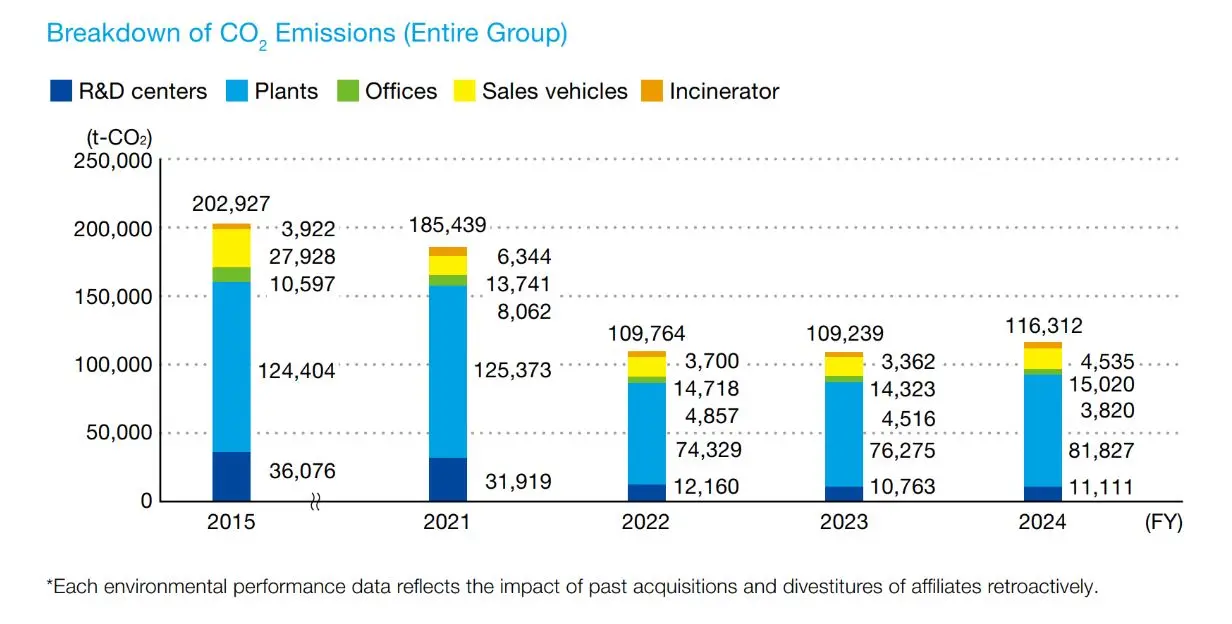
Breakdown of CO2 Emissions(Entire Group)
CO2 Emissions by Scope
Total CO2Emissions by Region (Scope 1 and Scope 2)
(t-CO2)
Supply Chain GHG Emission (Scope 3) (Entire Group)
CO2 Emissions Reduction Initiatives
Initiatives at plants and research facilities
We select and install highly efficient energy-saving refrigerators and boilers when upgrading equipment, and implement measures to reduce CO2 emissions such as installing heat insulation on steam piping, improving the efficiency of air conditioning operation, and using natural light by making use of optical ducts.
Initiatives at offices
At office buildings, energy-saving is promoted by installing LED lights and motion detectors throughout buildings. In addition, measures to reduce energy consumed at offices are actively implemented, such as wearing casual business clothing throughout the year, ensuring the lights and air conditioners are turned off in unused meeting rooms, and recommending employees to leave work on time by optimizing schedule management. In respect to employees’ travels between operation sites, efforts are being taken to reduce domestic and international business trips by further improving and utilizing video conference system.
Energy usage
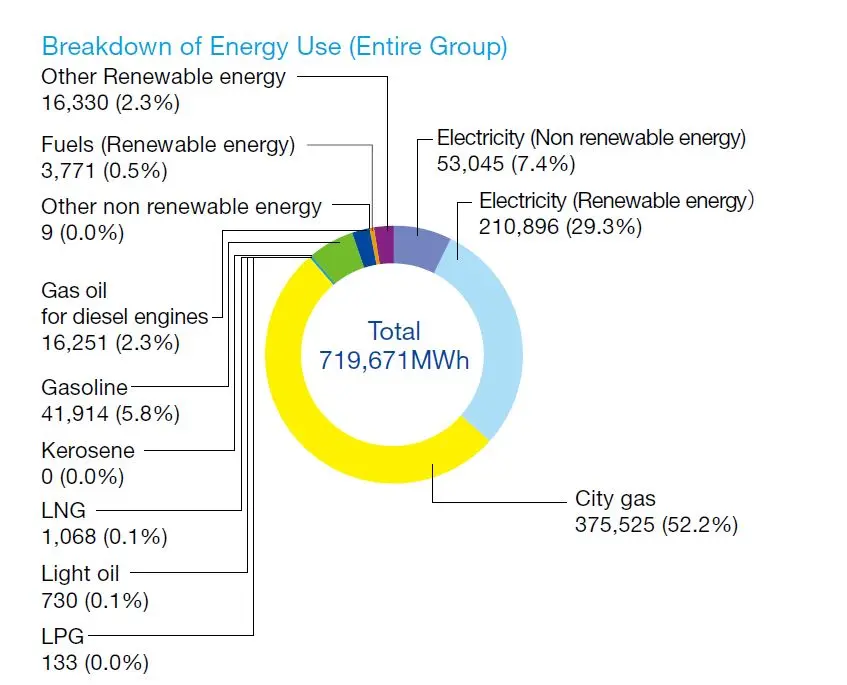
Breakdown of Energy Use (Entire Group)
Utilization of Renewable Energy
At Daiichi Sankyo Europe Pfaffenhofen Plant in Germany, which has been converting all purchased electricity to electricity generated from renewable energy since 2014, a self-consumption solar power system (annual energy production of 580 MWh) constructed on the plant’s premises began operation in February 2022. Moreover, in FY2023, we began converting to renewable fuels by using biomass wood pellets for steam production. In addition, in January 2023, the Daiichi Sankyo Pharmaceutical (Shanghai) Shanghai Plant began using a solar power plant (with annual energy production of approx. 540 MWh), which is able to cover the annual energy consumption of the plant’s administrative building. This is expected to reduce CO2 emissions by 300 tons per year. In addition, at Onahama Plant, which started operation of the solar power system with annual energy production of approx. 4,000 MWh in December 2020, finished construction of the Daiichi Sankyo Group’s first Nearly ZEB-certified building, its new office, in March 2023. This office generates electricity using solar power and saves energy by effectively combining high-efficiency air conditioning, water heating, and lighting equipment, thereby cutting standard building energy consumption by 78% (51.9% from energy savings and 26.9% from energy generation). The Daiichi Sankyo Group is a member of RE100 and aims to achieve a 100% utilization rate of electricity derived from renewable energy sources by FY2030 and a materiality KPI of at least 60% by FY2025. The renewable electricity utilization rate in FY2024 is 79.9%, well on track to achieve RE100. We will continue to actively introduce various renewable energy sources, including solar power generation.
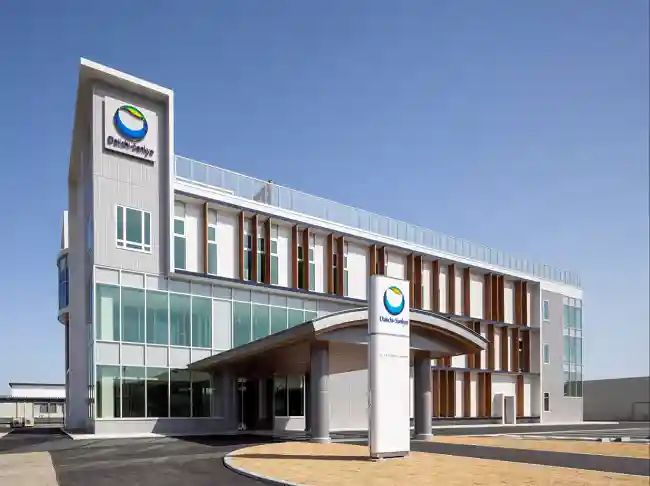
Onahama Plant New management building
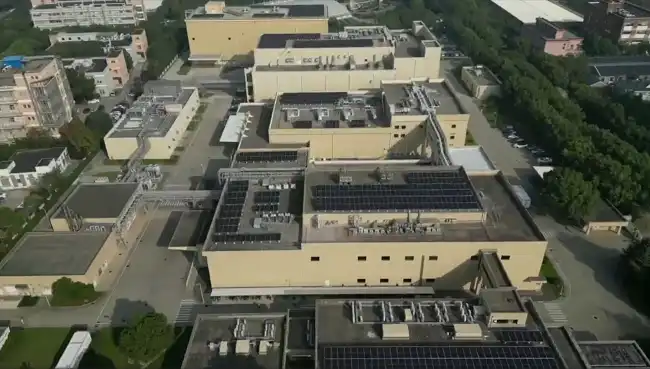
Daiichi Sankyo Pharmaceutical (Shanghai) Shanghai Plant
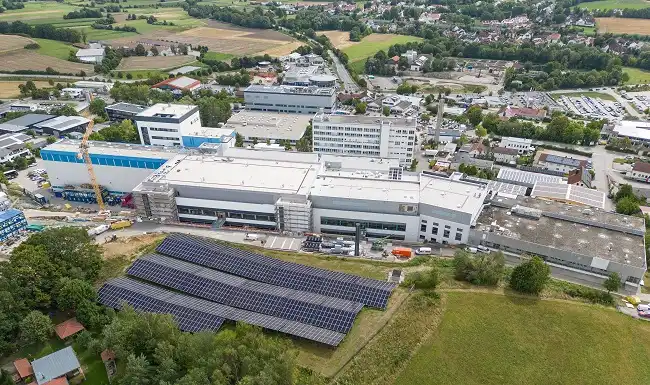
Daiichi Sankyo Europe Pfaffenhofen Plant
Renewable Energy Usage and Breakdown
Emissions Trading
The Shinagawa R&D Center and Kasai R&D Center are among the facilities subject to the mandatory emission reduction scheme and the emissions trading system, Tokyo Cap and Trade Program, under the Tokyo Metropolitan Ordinance on Environmental Preservation. Daiichi Sankyo Biotech is also among such facilities under the Saitama prefectural government's global warming countermeasures ordinance. Recognized for their particularly outstanding measures to combat global warming, the Shinagawa R&D Center and Kasai R&D Center were certified as a “near-top-level facility” in fiscal 2019 and fiscal 2020, respectively.
Supplementary Notes
Conversion factors and their sources
Conversion factors of the Accounting and Reporting System under the Act on Promotion of Global Warming Countermeasures are used for the CO2 conversion factor and the energy conversion factor.
Regarding countries outside Japan, the factors commonly used in such countries or the factors based on GHG protocol are used.
Emissions not in the calculation
The emission data does not include emissions in Scope 1 or Scope 2 from small offices outside Japan. Also, it does not include emissions of GHGs other than CO2, as they are small in quantity.
GHG emissions from sold products
Any use of sold products will not help reduce GHG emissions.
Improving credibility of the environmental performance data
Aiming to improve the credibility of the information disclosed to stakeholders, Daiichi Sankyo receives third-party assurance for its environmental performance data. When aggregating the environmental performance data, we strive to improve the accuracy and credibility of the data disclosed by inputting highly objective data in principle, based on evidence issued by third parties, such as purchasing slips.